






















Supplier Performance Management
Enterprise Supplier Performance Management Platform


















Most Supplier Performance Is Managed on Assumption, Not Evidence.
In most organizations, supplier performance is not formally measured - it is informally assumed. Without a structured framework for defining expectations, capturing operational outcomes, and scoring suppliers consistently, procurement teams rely on collective perception rather than objective data. There is no shared, real-time view of which suppliers meet commitments, which are declining, and which represent growing operational risk. When renewal decisions and sourcing events arrive, procurement is working from impressions rather than evidence.
The impact builds quietly. Underperforming suppliers continue to receive orders because no clear threshold exists to flag them. High-performing suppliers go unrecognized or underutilized. Corrective actions are discussed but not tracked to resolution. Improvement commitments made in review meetings are never followed up. When leadership asks which, suppliers are strategic and which are liabilities, procurement cannot provide a clear, data-backed answer.

What is Supplier Performance Management?
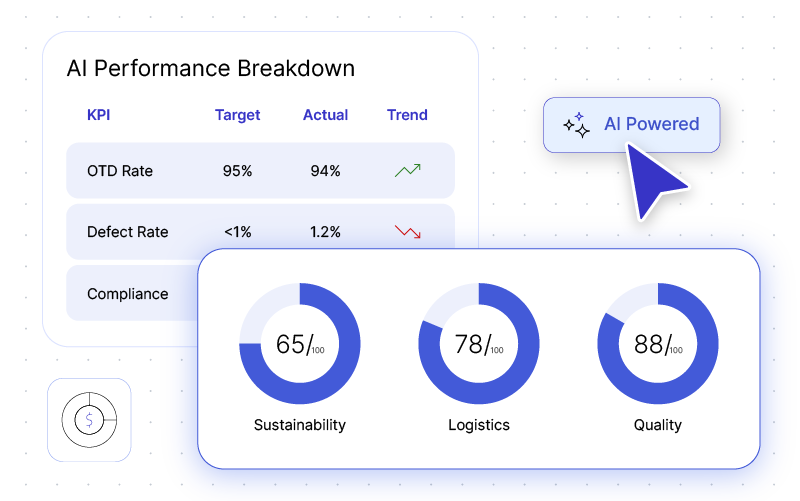
Supplier Performance Management (SPM) is the structured process of defining performance expectations, collecting operational data, scoring suppliers against agreed KPIs, conducting periodic reviews, and driving continuous improvement across the active supplier base. It transforms supplier evaluation from an occasional, opinion-based exercise into an ongoing, evidence-driven discipline.
In the Source-to-Pay lifecycle, SPM connects procurement outcomes to supplier accountability. SAFAL's SPM platform ensures that:


How SAFAL Supplier Performance Management Works?
Define KPIs and Scorecards
- Configurable KPI libraries by category and supplier tier
- Weighted scorecard templates for delivery, quality, service, and compliance
- KPI targets and acceptable thresholds set at the category or supplier level
- Automated scorecard assignment to suppliers on activation
Collect Performance Data
- Automated data capture from PO fulfillment, GRN, delivery, and invoice records
- Quality event logging from goods receipt inspections and non-conformance reports
- Stakeholder feedback collection through structured rating forms

Score and Rate Suppliers
- Weighted scoring across KPI dimensions per scorecard template
- Automated score calculation at configurable intervals - monthly, quarterly, or event-triggered
- Performance tier assignment based on score thresholds
- Score trend analysis to identify improving, stable, or declining suppliers
Conduct Structured Performance Reviews
- Automated review scheduling based on score events or calendar
- Review packs with scorecard data, trend history, and action log
- Multi-stakeholder review participation with role-based input
- Review outcomes recorded with approved ratings and agreed commitments

Manage Corrective Actions and Improvement Plans
- Corrective Action Requests (CARs) issued directly from review outcomes
- Improvement plans with milestones, responsibilities, and due dates
- Progress tracking with escalation alerts for overdue actions
- Performance re-evaluation following completion of improvement plans
Key Capabilities






Why SAFAL Supplier Performance Management
- Configurable KPIs and scorecards with weighted, multi-dimensional scoring
- Automated data collection from PO fulfillment, GRN, quality, and invoice records
- Structured review workflows with supplier self-assessment and multi-stakeholder input
- Corrective action and improvement plan management tracked to resolution
- Performance scores feed directly into sourcing eligibility and supplier segmentation
- Real-time alerts for performance deviations and threshold breaches
- Bi-directional ERP integration with SAP (ECC and S/4HANA), Oracle, Microsoft Dynamics, and Navision
Transform How Your Organization
Evaluates And Develops Suppliers
Without Supplier Performance Management
- Performance assessed through informal feedback and memory
- No consistent performance criteria across categories
- Underperforming suppliers continue to receive orders
- Corrective actions discussed but never formally tracked
- Reviews held inconsistently with no documented outcomes
- Strategic and transactional suppliers treated identically
With SAFAL Supplier Performance Management
- KPI-based scorecards with automated data collection and weighted scoring
- Configurable KPIs and scorecard templates by category and supplier tier
- Score thresholds enforce sourcing eligibility and procurement controls
- Corrective Action Requests tracked to resolution with milestone alerts
- Structured review cadence with recorded scores, decisions, and commitments
- Performance-linked segmentation drives differentiated supplier management
Use Cases

Manufacturing and Industrial Operations

EPC and Project-Based Procurement

Strategic Supplier Development Programs

Contract Renewal and Sourcing Decisions

Multi-Entity and Centralized Procurement
Types of Supplier Performance Reviews
Benefits for Enterprise Procurement Teams

Replace Assumption with Evidence in Supplier Decisions
Identify and Develop Strategic Suppliers

Reduce Supply Chain Risk from Underperformance
Close the Loop on Every Performance Gap

Build Accountability into Supplier Relationships
Connect Performance to Sourcing and Contracting
Turn supplier performance from assumption into evidence
See how SAFAL Supplier Performance Management replaces informal assessments with structured KPIs, automated scoring, and improvement workflows - connected to your sourcing, contracts, and ERP.

"Very Helpful for proactive spend control"
Director, Finance